
Jewelry Care
Fine jewelry is made to be worn, but over time, everyday wear can impact its appearance and structure. Understanding how to properly care for your jewelry helps preserve its beauty, maintain its integrity, and prevent avoidable damage.
This guide is designed to walk you through the essentials of jewelry care—from cleaning and storage to maintenance and inspections—so you can keep your pieces looking their best for years to come.
💎 When to Remove Your Jewelry
Fine jewelry is designed for everyday wear, but certain activities can expose it to unnecessary stress, chemicals, or impact that may affect its appearance and structure over time.

1.
During activities
We recommend removing your jewelry during activities that involve contact, pressure, or harsh environments. This includes exercising, lifting weights, swimming, or yard tasks.

2.
Hands on work
Be mindful during everyday tasks. Regular contact with hard surfaces—such as counters, desks, or equipment—can impact delicate details like prongs and small accent stones.

3.
Chemical Exposures
It’s also important to remove your jewelry when using household cleaners, applying lotions, or handling chemicals, as residue can build up over time and dull the brilliance of your stones or affect the finish of your metal.
Regular maintenance is essential to preserving the beauty and integrity of your ring over time. With everyday wear, even the finest jewelry can experience gradual changes that are not always visible right away. Routine inspections and care help ensure your stones remain secure, your setting stays strong, and your piece continues to look as beautiful as the day you received it
CLEANING
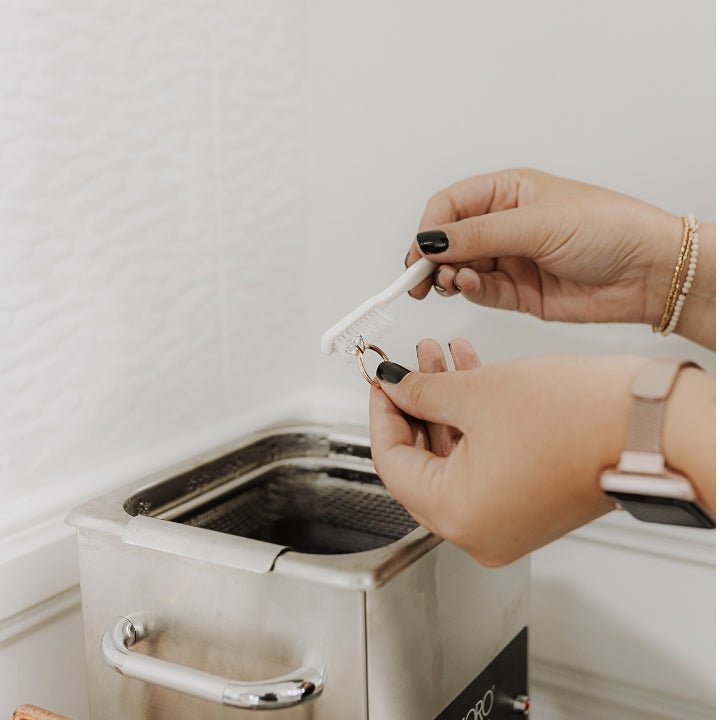
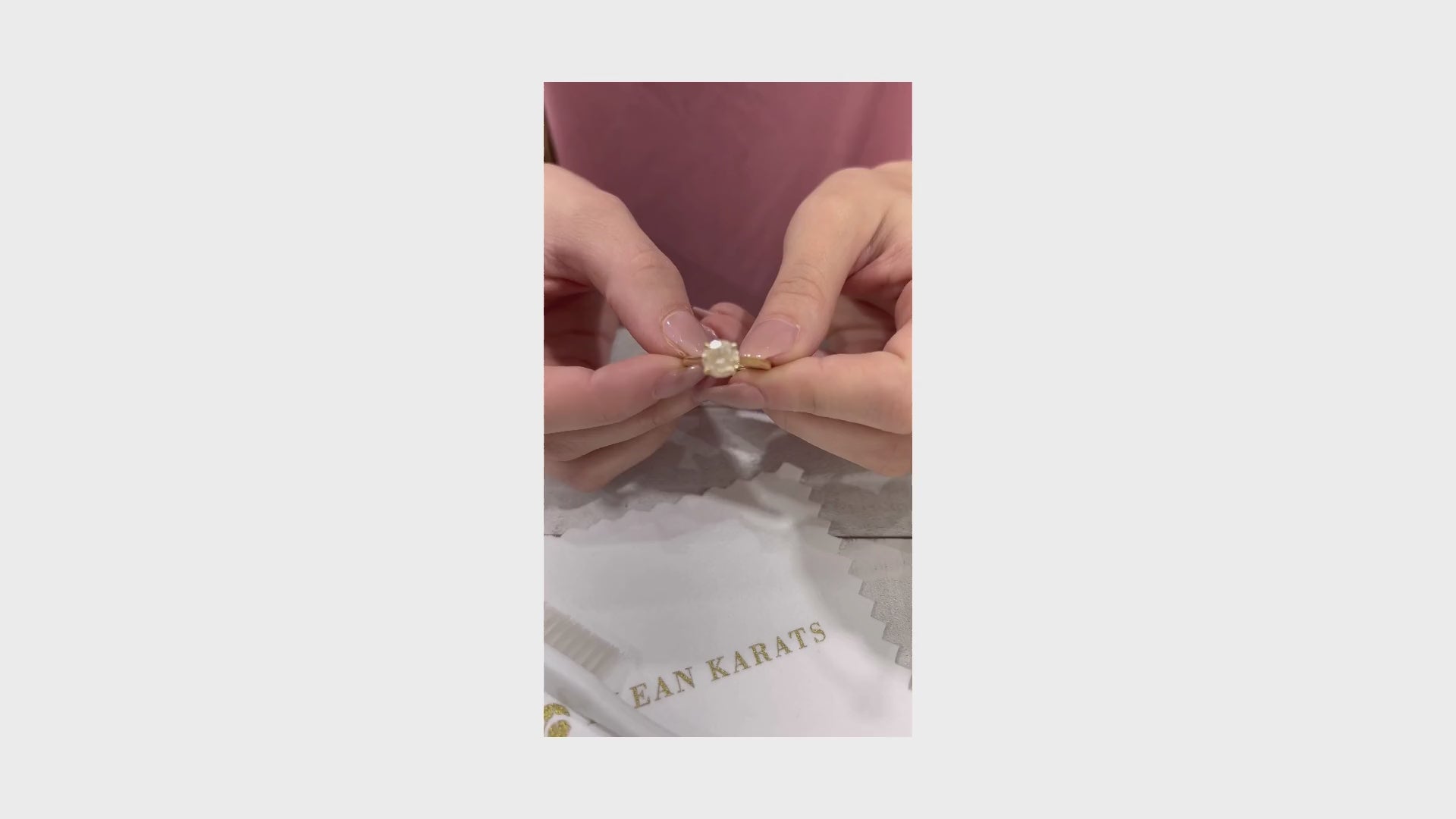
We take great pride in helping you care for your jewelry and keep it looking its best. Whether your piece features moissanite, a lab-grown diamond, or other fine gemstones, regular cleaning plays an important role in maintaining its brilliance.
For our valued clients, we offer unlimited complimentary ultrasonic cleanings in-store to restore your jewelry’s sparkle and ensure it remains in excellent condition. If visiting us in person isn’t convenient, we offer a specially formulated jewelry cleaner designed for safe and effective at-home use.
Alternatively, a simple cleaning solution of warm water and mild dish soap, paired with a soft brush, is a safe and effective way to maintain your jewelry between visits.
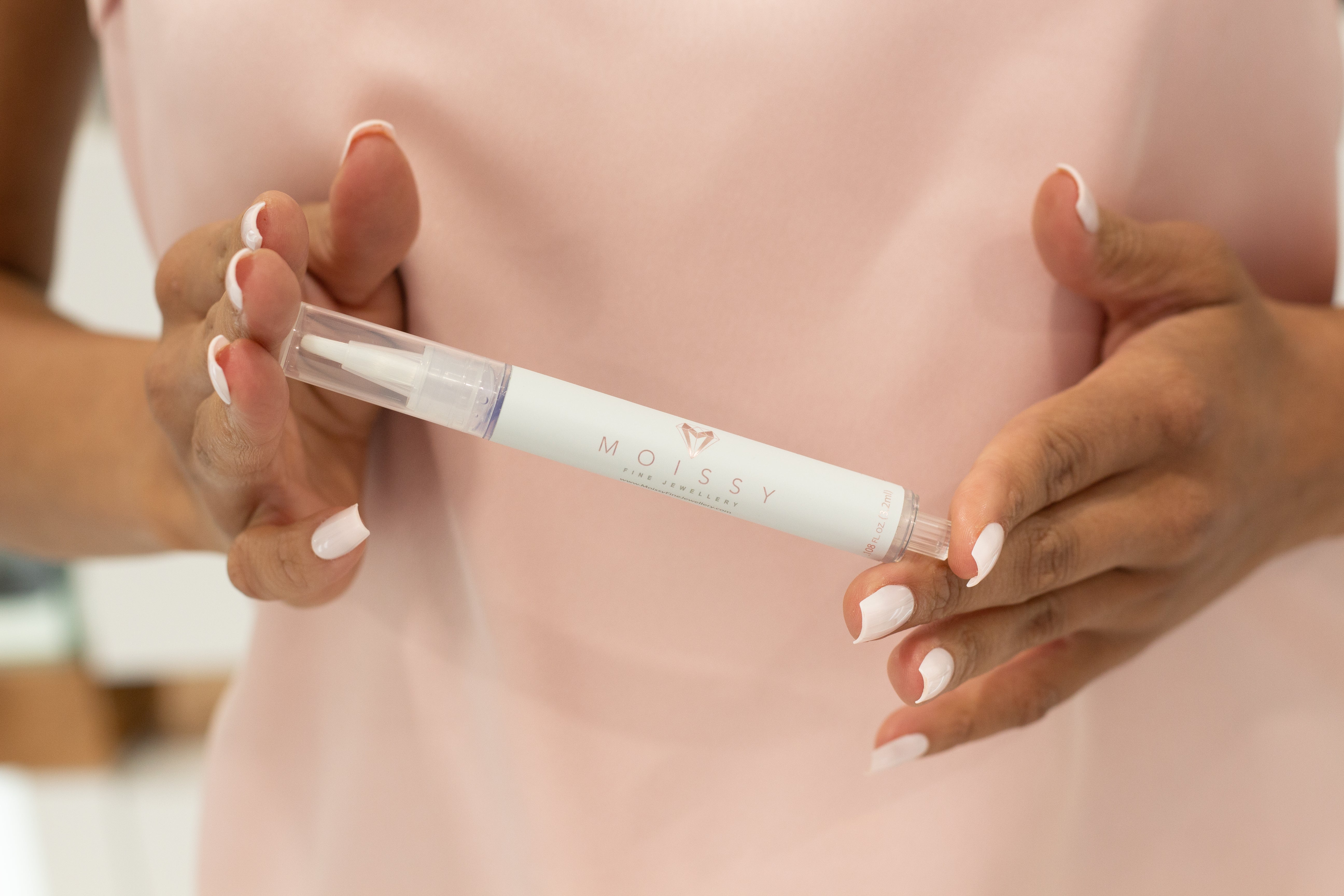
Now Available Travel Size Cleaning Pens
Get your hands on a travel-sized compact cleaning pen to maintain the dazzling sparkle of your precious jewelry. Perfect travel size to keep jewelry sparkling on vacation or away from home.
Caring for White Gold
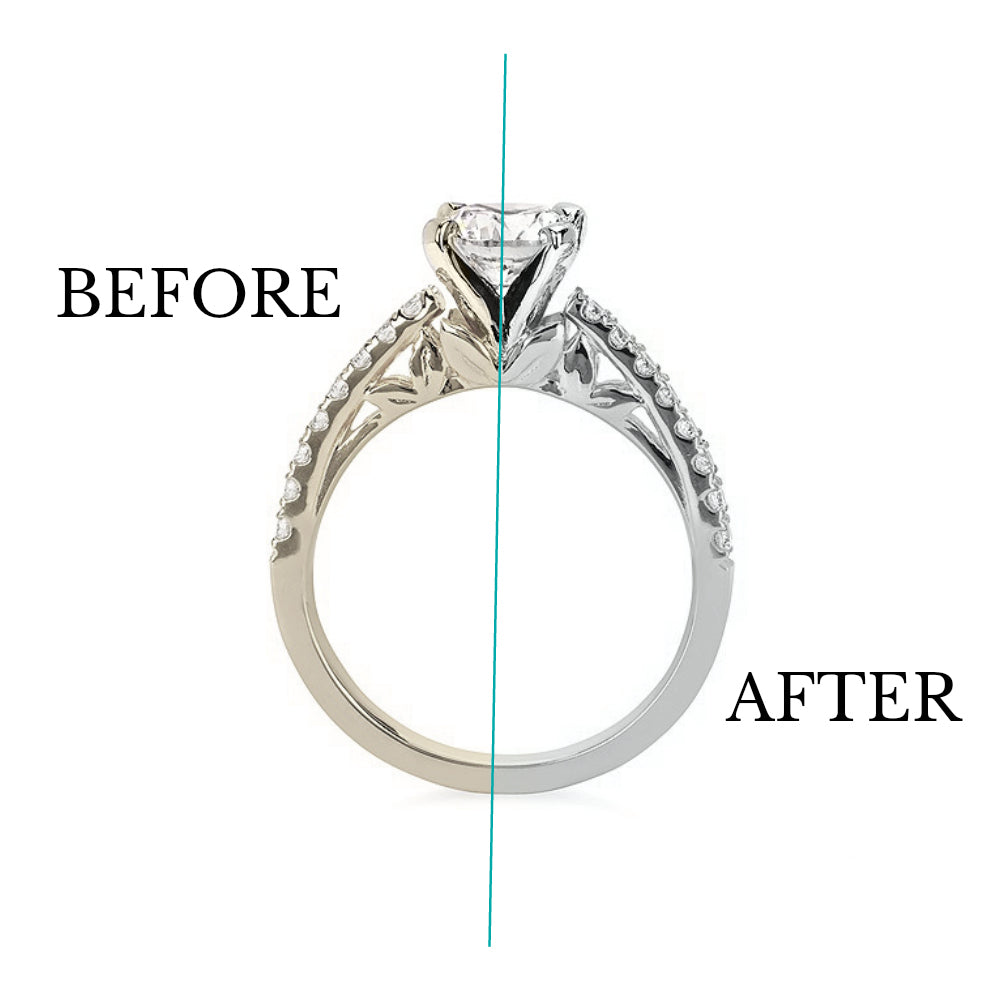
White gold is a beautiful and durable metal, known for its bright, polished finish. Most white gold jewelry is coated with rhodium, which enhances its shine and gives it a crisp, white appearance. Over time, this rhodium layer will naturally wear down with everyday use, causing the metal to develop a slightly warmer tone. This is a normal part of wear and not a defect. To maintain its original brilliance, we recommend periodic professional polishing and rhodium plating 1-2 times per year, or as needed.
If you're looking for a jewelry option that eliminates the need for frequent rhodium maintenance, consider choosing Platinum metal for your pieces. Platinum is a naturally white metal that retains its color even after time has passed. With time, it develops a brushed silver look. Although platinum is a denser and pricier metal choice, it offers the advantage of reduced rhodium maintenance requirements.
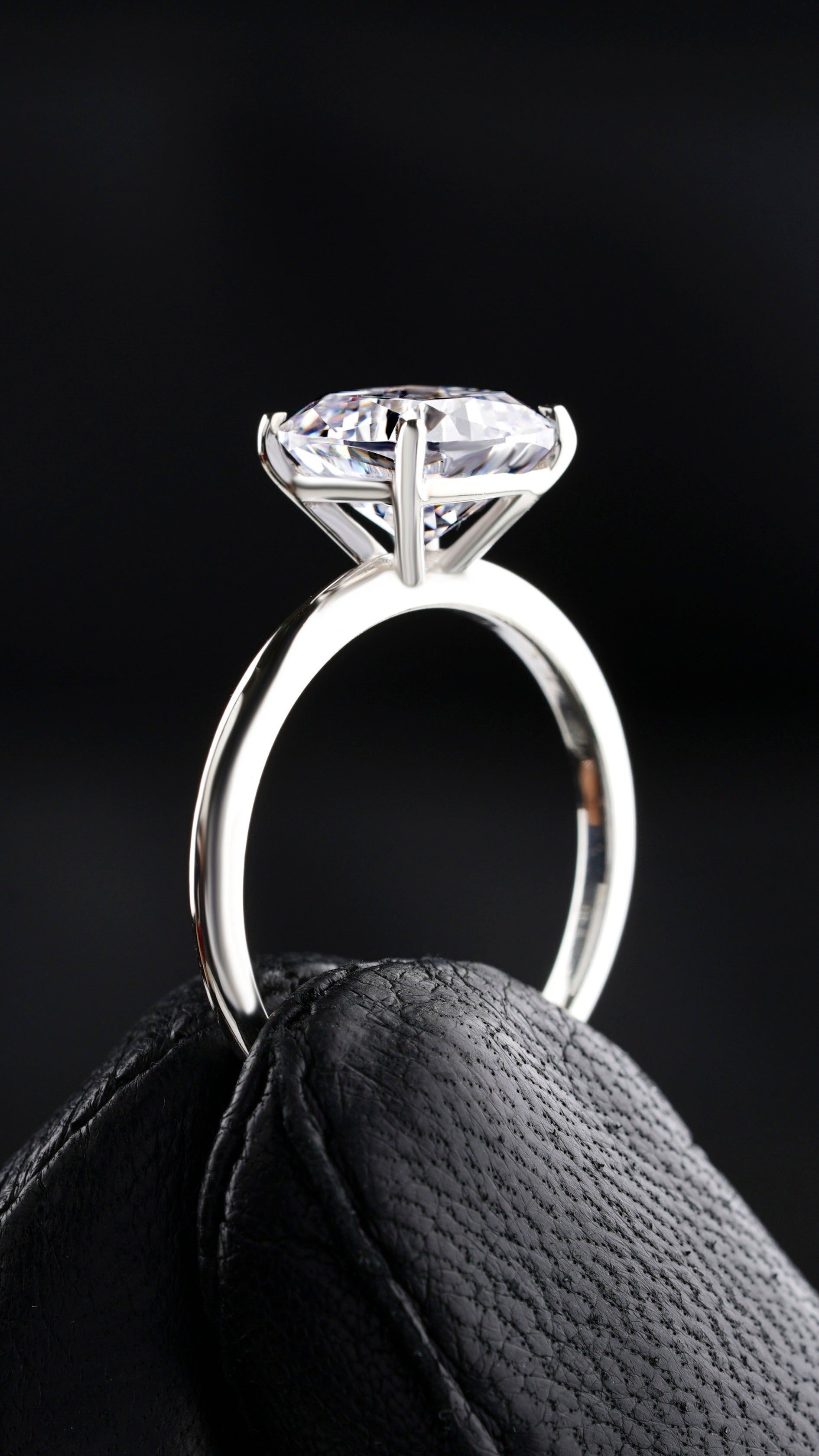
RESIZING + REPAIRS
Did you purchase a ring in the wrong size, or has your fit changed over time? Don’t worry — we’re here to help.
We offer complimentary resizing within 90 days of your original pickup or delivery date for Moissy Fine Jewelry rings. After this period, resizing services are still available at our current service rates.
Please note that resizing typically takes 1–2 weeks to complete, though turnaround times may vary during peak periods.
If you need to ship your ring to us for resizing, please contact us at arizonacare@moissyfj.com for assistance. Kindly note that shipping costs are not covered by Moissy Fine Jewelry.

When Damage Happens
We understand how upsetting and overwhelming it can feel when your ring is damaged. It’s not just a piece of jewelry—it holds meaning, memories, and emotion. When something happens to it, it can be both scary and deeply disappointing.
Our approach is never about placing blame. Life happens, accidents happen, and most rings with significant damage come with a story behind them. Some are shared, and some are too difficult to talk about—but no matter the situation, you can trust that our focus is on helping you.
Our goal is always to restore your ring whenever possible and bring it back to a condition you feel proud to wear again. While there may be costs involved depending on the level of repair, we are committed to guiding you through the process and doing everything we can to bring your piece back—or help you replace it—so you can move forward with confidence.
We also encourage considering home or personal jewelry insurance for unforeseen situations. Having coverage in place can help ensure you’re able to restore or replace your piece quickly, so you can get back to enjoying your sparkle as soon as possible.